
Stephen F. Austin State University’s SAM chapter earned first place in the large chapter division by doing something that is easy to talk about and much harder to sustain: building a chapter that performs at a high level across every major area of student engagement. In a large chapter, success is not about having more people or more activity for the sake of appearance. It is about creating systems that keep a broad membership engaged, developing leaders who can carry responsibility well, and maintaining enough structure that growth leads to stronger execution rather than confusion. That is exactly what Stephen F. Austin State accomplished throughout the 2025–2026 year.
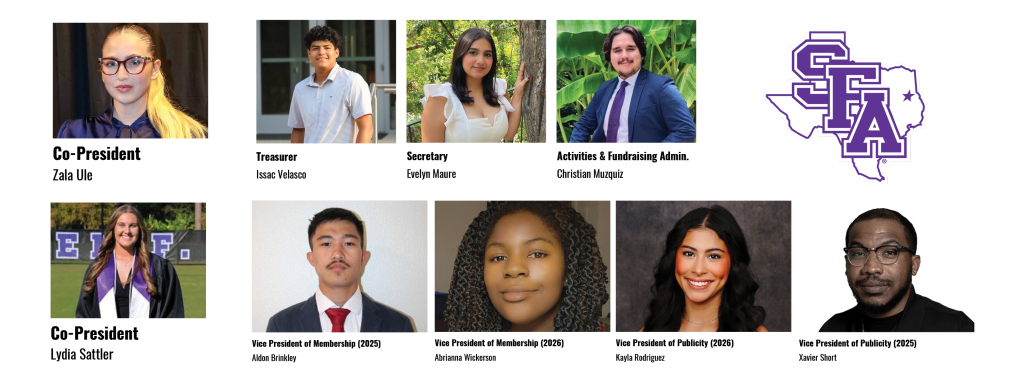
From the beginning, the chapter showed a clear sense of identity and direction. Their leadership team was organized with defined officer roles, shared responsibility, and a visible commitment to making the chapter active, welcoming, and professionally valuable for members. That structure mattered because this was not a chapter built around one or two isolated efforts. It was a chapter running a full year of meetings, workshops, fundraising events, student outreach, guest speakers, and competition preparation. First place in the large chapter division reflects more than activity. It reflects the ability to coordinate moving parts consistently and with purpose.
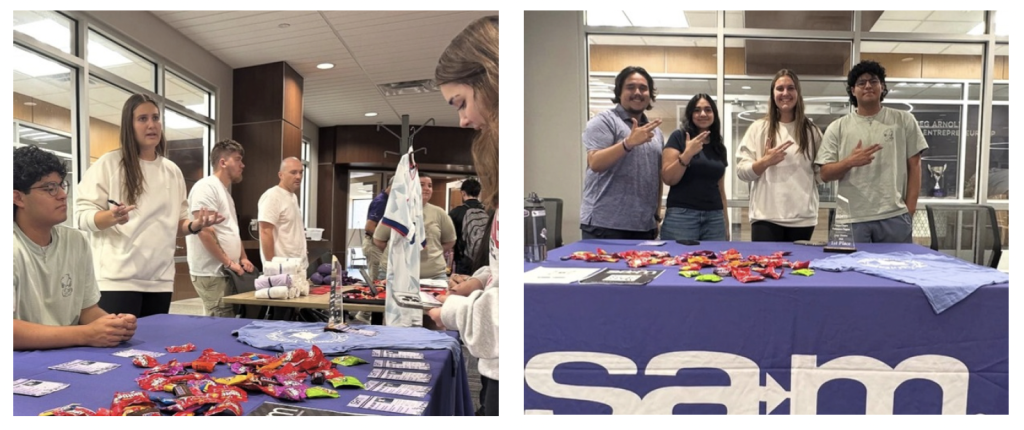
One of the clearest examples of that purpose was the chapter’s approach to recruitment and early engagement. Through events like the interest meeting and New Student Convocation, the organization made a deliberate effort to connect with newer business students and introduce them to the value of SAM from the beginning of their college experience. These events were not simply promotional. They were designed to help students understand how SAM could support leadership development, professional readiness, and real-world business application. In a large chapter setting, building that pipeline matters. Stephen F. Austin did not wait for students to discover the organization on their own. They created structured opportunities to bring them in and help them see where they belonged.
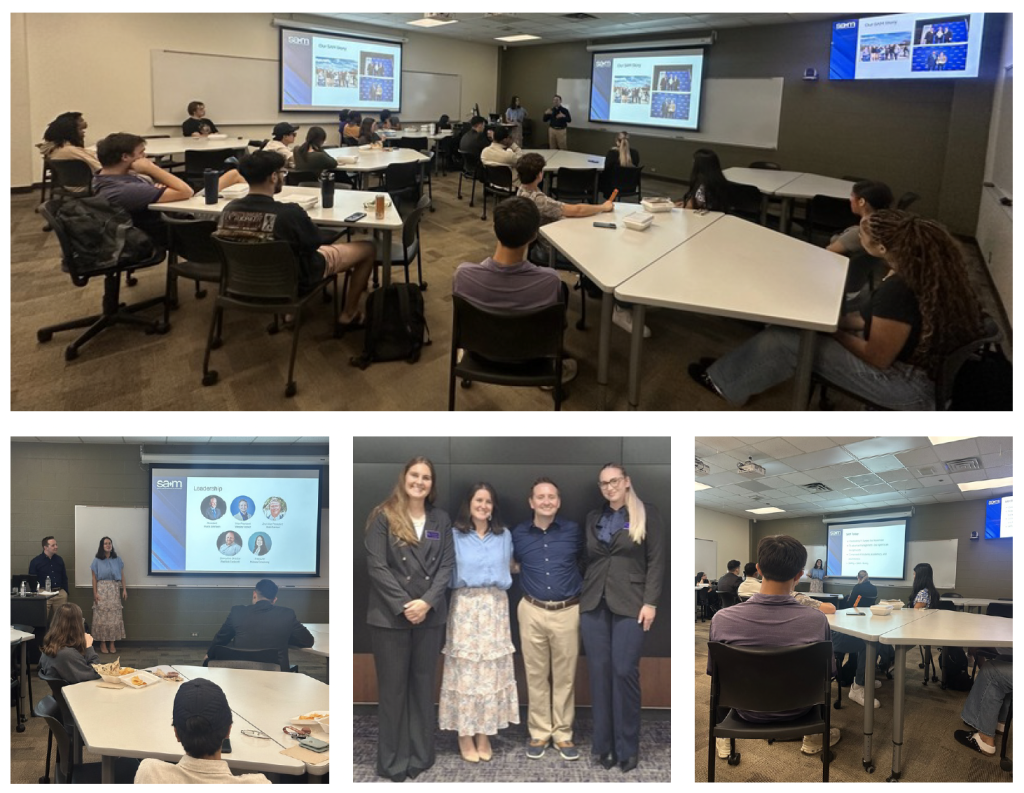
That same intentionality carried into the chapter’s regular programming. Weekly meetings were not treated as routine check-ins. They were used as vehicles for development. Members participated in personality assessments, business trivia competitions, networking workshops, resume sessions, LinkedIn workshops, and guest speaker presentations that exposed them to different career paths and leadership perspectives. The chapter also brought in leaders from SAM International, along with professionals from banking, sales, and technology sectors, giving students direct access to people whose stories and advice could shape their own professional goals. This breadth of programming is one of the strongest reasons the chapter stood out. They were not relying on one type of engagement. They built a chapter experience that met members where they were and kept providing new ways to learn and grow.
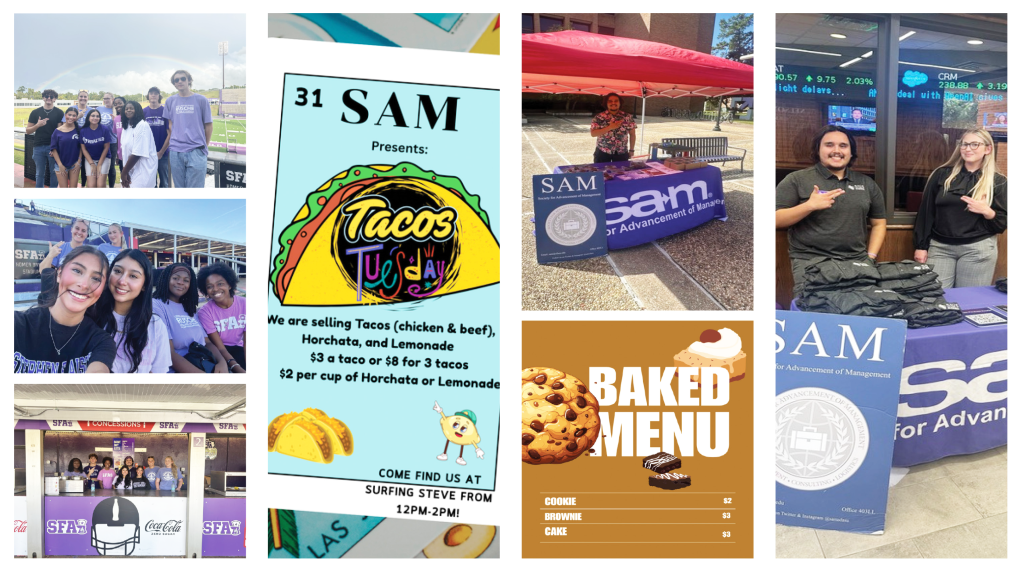
The chapter also excelled in the area of fundraising, which in a large organization requires coordination, member participation, and follow-through. Their fundraising efforts included football concession stands, a bake sale, a taco fundraiser, and a sales competition involving Rusche College of Business polos. These activities generated real financial support for the chapter, with concession work alone bringing in more than $2,300, while also giving members hands-on experience with teamwork, planning, sales, and event execution. What stands out here is that fundraising was not treated as a necessary burden. It became another space for members to build relationships and apply management skills in a practical setting. That matters, especially in a chapter of this size, because large organizations only remain healthy when members see how shared effort produces shared results.
Their ability to balance professional development with chapter culture also played an important role in this first-place finish. The chapter report makes it clear that members were not only working together, but growing together. Fundraising events, officer coordination, social experiences, and the end-of-year banquet all contributed to a sense of community that reinforced the chapter’s identity. In a large division, this is one of the biggest management challenges. It is easy for a chapter to stay busy and still feel disconnected internally. Stephen F. Austin avoided that. Their year reflects a chapter that kept people involved not only through programming, but through belonging.
The chapter’s commitment to communication and visibility strengthened that foundation even further. News and updates were distributed through Instagram, LinkedIn, Outlook, and GroupMe, with publicity responsibilities clearly managed by chapter leadership. That consistency helped ensure that members stayed informed and connected while also allowing the chapter to maintain a strong public presence. Good management in a large organization depends on communication systems that people actually use, and Stephen F. Austin clearly understood that. Their communication was not incidental. It was part of the chapter’s operating structure.
Just as important, this first-place finish was not built in isolation from the chapter’s larger history of achievement. Stephen F. Austin has a long record of success in the Campus Chapter Performance Program and across SAM competition categories, and the 2025–2026 year added to that tradition rather than simply leaning on it. The chapter’s past large division first-place finishes, previous top placements in case competition, and continued preparation for multiple competition divisions in 2026 show that this is an organization built on continuity as much as momentum. Strong chapters do not just repeat activity year after year. They create a culture where leadership transitions, institutional memory, and member development allow excellence to continue. That is one of the clearest markers of what separated Stephen F. Austin from the field.
Their planning for the future reinforces the same point. The chapter was not only executing during the current year, but preparing for what came next through continued meetings, guest speakers, competition preparation, career readiness support, and semester wrap-up activities that helped members carry momentum forward. In a large chapter, sustainable success depends on the ability to think beyond the current event cycle and keep students aligned around a longer-term mission. Stephen F. Austin’s report shows a chapter that understands exactly that.
First place in the large chapter division is about more than being active. It is about demonstrating that a chapter can lead at scale without losing focus, purpose, or quality. Stephen F. Austin State University’s SAM chapter did that throughout the year. They built systems, created meaningful opportunities, generated resources, developed leaders, and sustained engagement across a broad membership base. Their first-place finish reflects a chapter that did not simply operate at a high level. It set the benchmark for what large chapter excellence can look like.