
Artificial intelligence is no longer a niche technology reserved for a handful of advanced firms. It is rapidly becoming a foundational capability that reshapes how organizations innovate, compete, and deliver value. From predictive analytics to automation and personalized customer experiences, AI is transforming decision-making processes and accelerating operational efficiency across industries. What was once considered a competitive edge is now emerging as an essential component of modern business strategy.
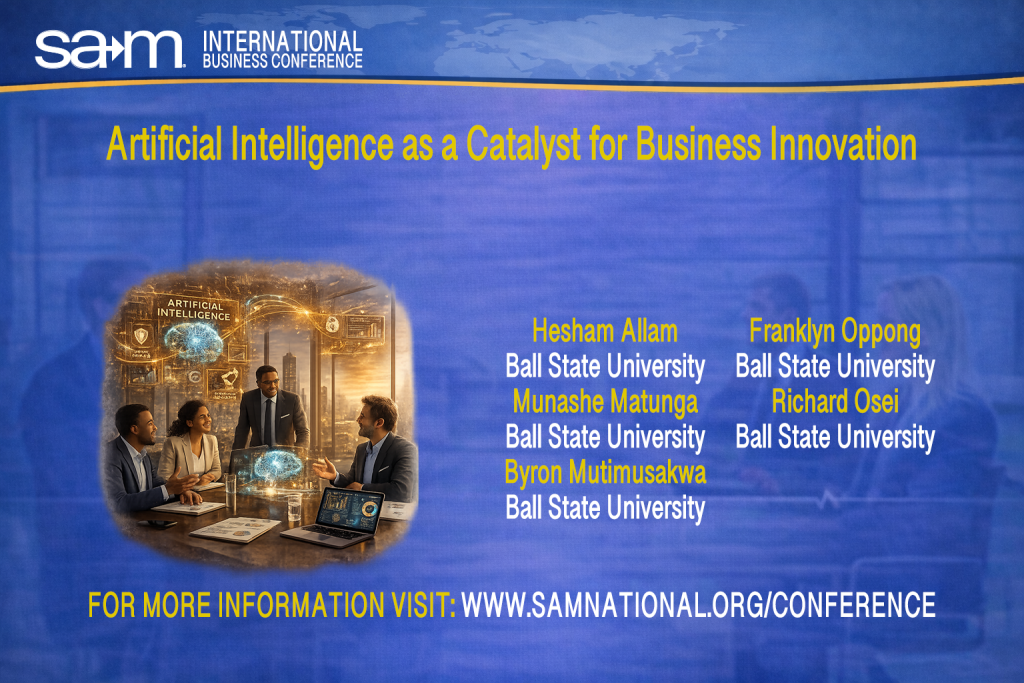
In this virtual presentation within the Innovation Management track, Hesham Allam and colleagues examine how AI functions as a catalyst for business innovation. The session explores how organizations leverage AI to replicate specific cognitive abilities such as pattern recognition, learning, and predictive analysis. By reducing the time required for routine tasks and enhancing the speed and accuracy of decisions, AI enables more agile and data-driven innovation models. These capabilities support new product development, improved service delivery, and the design of adaptive business models in rapidly changing markets.
Beyond operational improvements, the research highlights AI’s role in enabling broader strategic transformation. Organizations that integrate AI thoughtfully can move beyond incremental efficiency gains toward more scalable and responsive innovation systems. AI supports cross-functional collaboration, strengthens data-informed experimentation, and allows leaders to respond more effectively to evolving customer expectations and competitive pressures.
At the same time, the presentation addresses three critical challenges associated with AI implementation. Ethical concerns, including algorithmic bias and limited transparency, raise important questions about fairness and accountability. Data privacy and cybersecurity risks increase as AI systems depend on large volumes of sensitive information. Workforce implications also require careful attention, as automation may displace roles without adequate planning for reskilling, organizational learning, and employee support.
A central theme of the session is that AI adoption must be viewed as both a strategic and ethical commitment. Responsible innovation requires aligning AI initiatives with organizational values, governance frameworks, and human oversight. Rather than treating AI as a purely technical enhancement, leaders must approach it as a socio-technical transformation that affects culture, structure, and long-term trust.
Authors and Affiliations
Hesham Allam, Ball State University
Munashe Matunga, Ball State University
Byron Mutimusakwa, Ball State University
Franklyn Oppong, Ball State University
Richard Osei, Ball State University
Designed for academics, practitioners, and students, this session provides practical guidance for integrating AI into innovation strategy without compromising integrity or accountability. As AI continues to redefine the competitive landscape, organizations that balance innovation with responsibility will be best positioned for sustainable growth. Learn more about this presentation and register for the SAM International Business Conference at www.samnational.org/conference.