
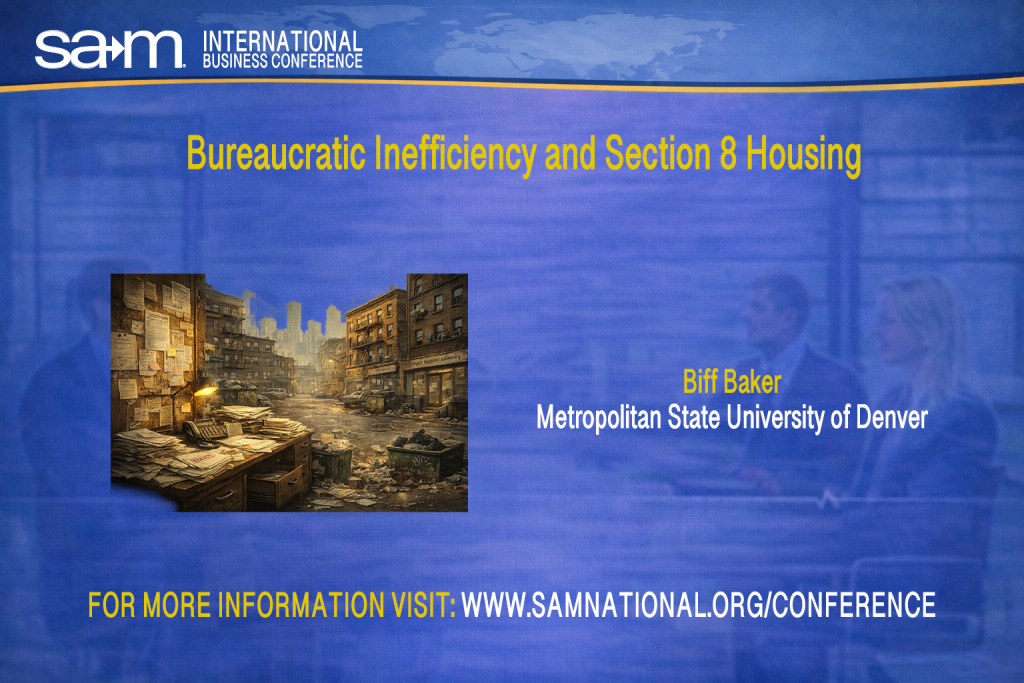
Housing assistance programs are designed to provide stability, yet their effectiveness often depends less on policy intent and more on administrative execution. The Housing Choice Voucher program, commonly known as Section 8, is a critical tool for supporting low-income families, but persistent bureaucratic inefficiencies continue to undermine its impact. When public systems fail to respond, communicate, or coordinate effectively, the consequences extend well beyond paperwork and timelines. They directly affect families, landlords, and trust in public institutions.
This accepted scholarly research presentation examines the structural breakdowns within the Colorado Springs Housing Authority and their implications for the Housing Choice Voucher program. Through a detailed case study involving a single mother of four and a willing landlord, the research illustrates how prolonged administrative delays, unclear communication, and lack of accountability placed housing stability at risk and discouraged continued landlord participation.
Rather than framing eviction or housing loss as the result of individual behavior, the study shifts attention to systemic failures within public housing administration. Drawing on public administration and housing policy literature, the analysis identifies four recurring issues: bureaucratic inefficiency, inadequate landlord support, lack of transparency, and potential equity concerns. Together, these failures contribute to declining landlord participation and reduced program effectiveness, even when voucher funding is available.
The presentation highlights a critical management challenge within public sector organizations: aligning operational processes with mission-driven outcomes. When agencies lack performance accountability and responsive communication systems, even well-funded programs struggle to meet their goals. The findings underscore how administrative practices shape stakeholder behavior and public trust, particularly in high-impact policy areas such as housing.
Designed for scholars, practitioners, and policymakers, this session contributes to broader conversations about governance, accountability, and the real-world consequences of administrative design. Attendees will gain insight into how public housing authorities can improve responsiveness, strengthen landlord engagement, and rebuild confidence in housing assistance systems through targeted operational reforms.
Authors and Affiliations
Biff Baker, Metropolitan State University of Denver
This presentation will be delivered virtually at the SAM International Business Conference and will offer participants an opportunity to engage with a timely case study on housing policy, bureaucratic performance, and public sector management.