
The Undergraduate Division of the SAM Collegiate Case Competition challenged students to move beyond analysis and into true strategic decision-making, as teams worked to develop actionable solutions for Senesco Marine.
Faced with a limited capital budget and competing operational priorities, teams were required to evaluate trade-offs, prioritize investments, and recommend a clear path forward for improving shipyard performance. The complexity of the case demanded not only strong analytical thinking, but also the ability to communicate and defend those decisions in a live, high-pressure environment.
Each team presented their strategy in a 15-minute executive-style briefing, followed by direct questioning from a panel of judges representing both industry and academia. The Q&A component proved critical, pushing teams to justify assumptions, clarify trade-offs, and demonstrate the feasibility of their recommendations.
The strength of the competition was reflected in the final results.
Undergraduate Division Results
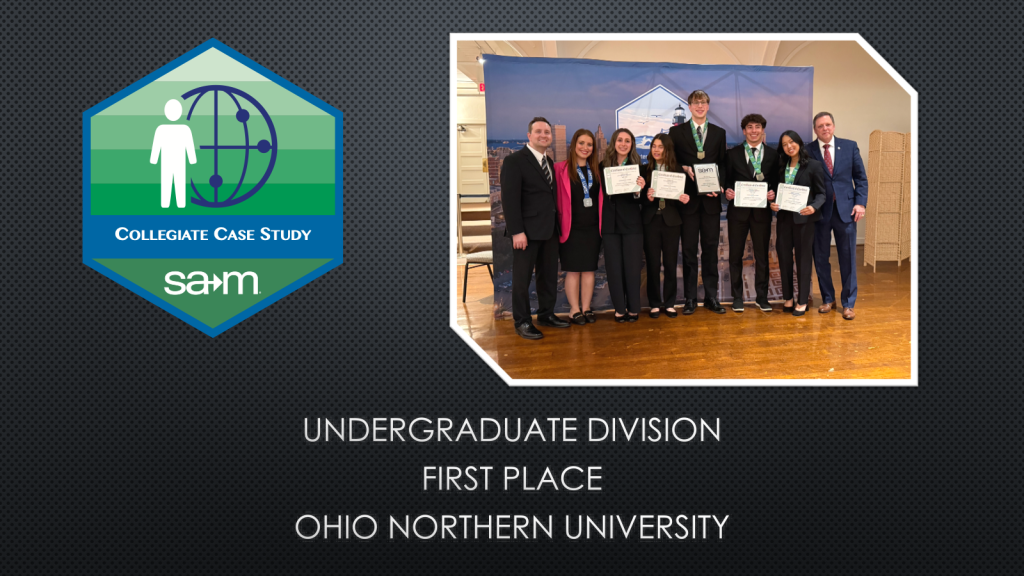
🥇 1st Place — Ohio Northern University
Aubrey Hattery, Emma Key, Brennon Ryan, Sterling Segal, Alexa Lane
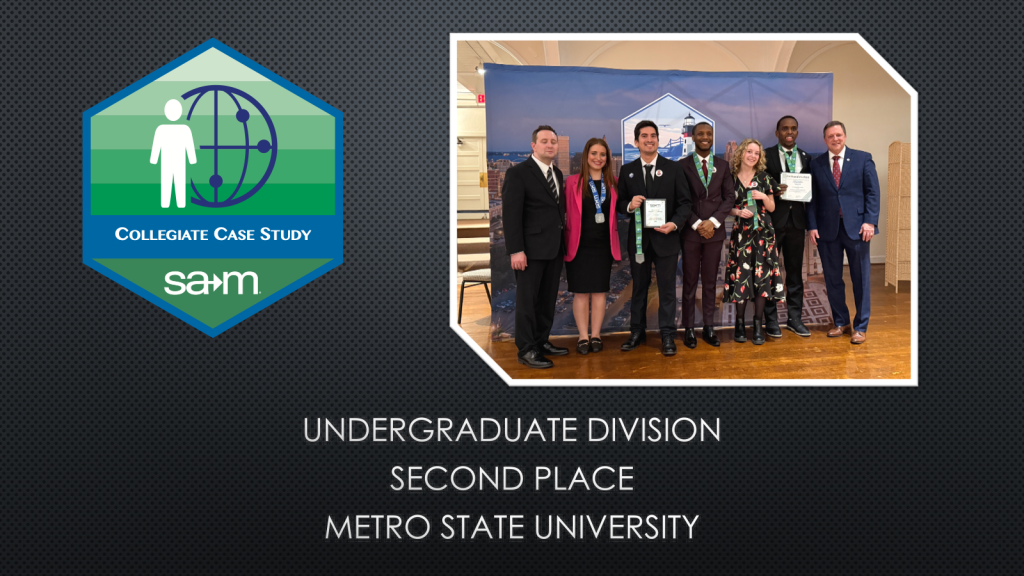
🥈 2nd Place — Metro State University
Emily Gangl, Mubashir Diriye, Renzo Paredes Benites, Justin Shukuru
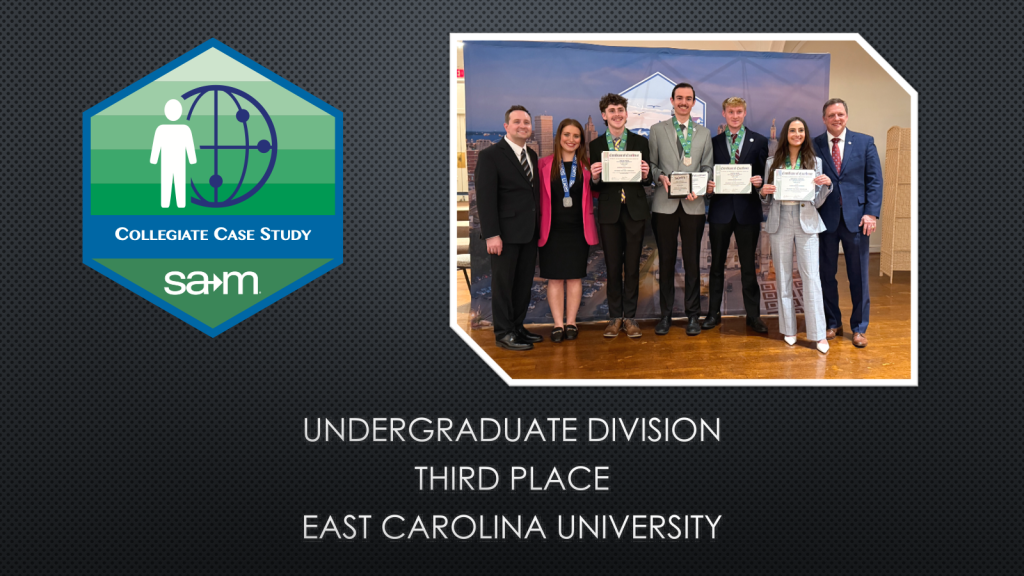
🥉 3rd Place — East Carolina University
Tristan Chitwood, Logan Holtz, Addison Carman, Carter Ward
What set this division apart was the balance between strategic thinking and practical application. The top teams did not just identify problems. They presented solutions that could realistically be implemented.
“What impressed us most wasn’t just the quality of the ideas, but how actionable they were,” said Ted Williams, President of Senesco Marine. “Several of the teams presented solutions we’re already exploring for implementation at Senesco. This competition didn’t just simulate real-world decision-making, it delivered insights that will directly influence how we operate moving forward.”
“After more than ten years of writing case studies with industry partners, this was one of the most innovative and engaged groups we’ve seen,” added Patrick Endicott, Executive Director of SAM. “When students are solving real problems for real companies, the level of thinking changes.”
The Undergraduate Division represents a critical step in preparing students for the realities of business leadership, where decisions must be clear, justified, and grounded in real constraints.