
The Open Division of the SAM Written Case Competition represents a different level of expectation. At this stage, students are not just demonstrating understanding. They are expected to perform at a level that mirrors early-career professionals, where clarity, structure, and judgment all carry weight.
This year’s competition delivered on that expectation. Teams from across the country were challenged to analyze a real-world business case centered on Senesco Marine, a Rhode Island based shipbuilding and marine services company. The task required more than identifying problems. It required developing focused, practical recommendations and presenting them in a written executive summary that could stand on its own.
That is not an easy assignment. Executive summaries demand precision. There is no room for unnecessary detail, and no tolerance for unclear thinking. Every sentence has to contribute. Every recommendation has to be supported. The teams that succeed are the ones that can distill complexity into something that feels both strategic and actionable.
What made this experience even more meaningful was the evaluation process. Submissions were reviewed by a panel of judges that included representatives from Senesco Marine. Students were not just writing for an academic audience. They were presenting ideas to professionals who operate in the space every day. That level of exposure changes how teams approach the work, and it showed in the quality of submissions.
“This entire experience has been amazing,” said Senesco Marine President Ted Williams. “These teams have just blown my mind with some of the ideas and innovations they have suggested.”
The competition itself reflected just how strong the field was. According to Competitions Chair Wesley Lopez, this year’s results were among the closest on record. The difference between teams came down to execution. How clearly ideas were communicated. How well recommendations were supported. How effectively teams could present a complete and convincing solution within a limited format.
Open Division Winners
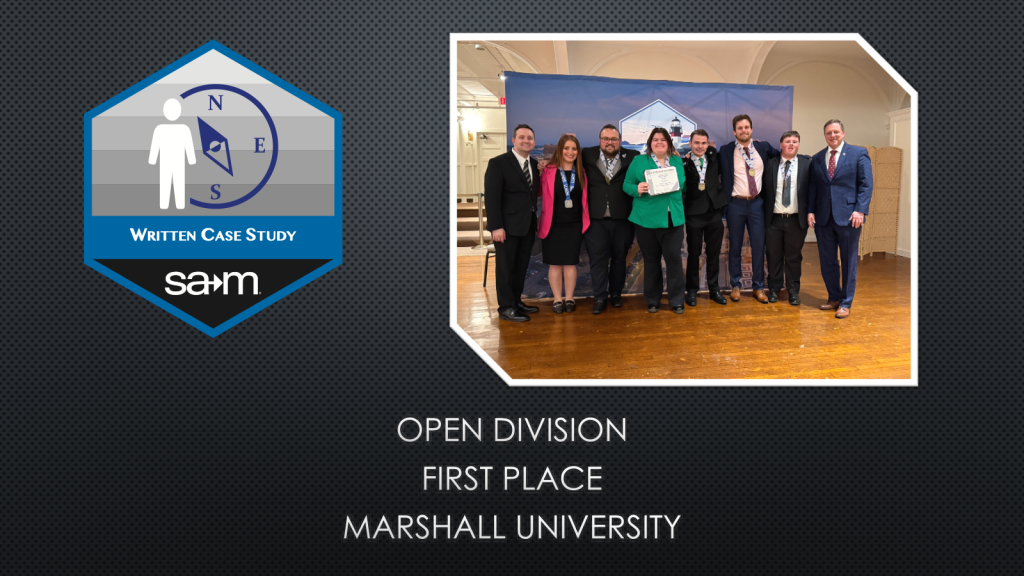
First Place — Marshall University
Chris Hermann, Brandon Kelley, Clare Walker, Michael Borsuk, and Eli Howard
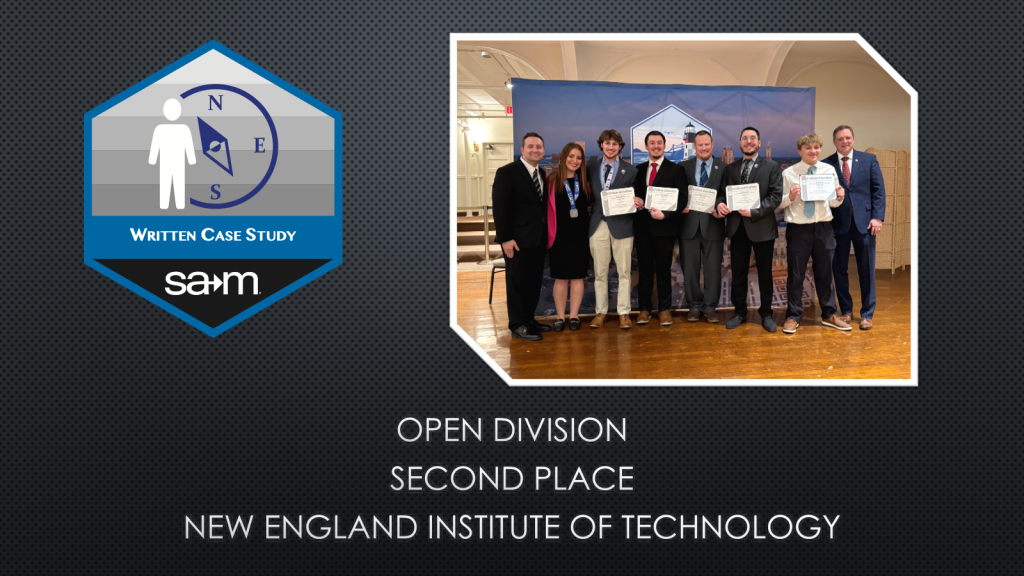
Second Place — New England Institute of Technology
Tyler Beaulieu, Kellen Masters, Diego Leaver, Jacob Kalif, and Lucas Sutton
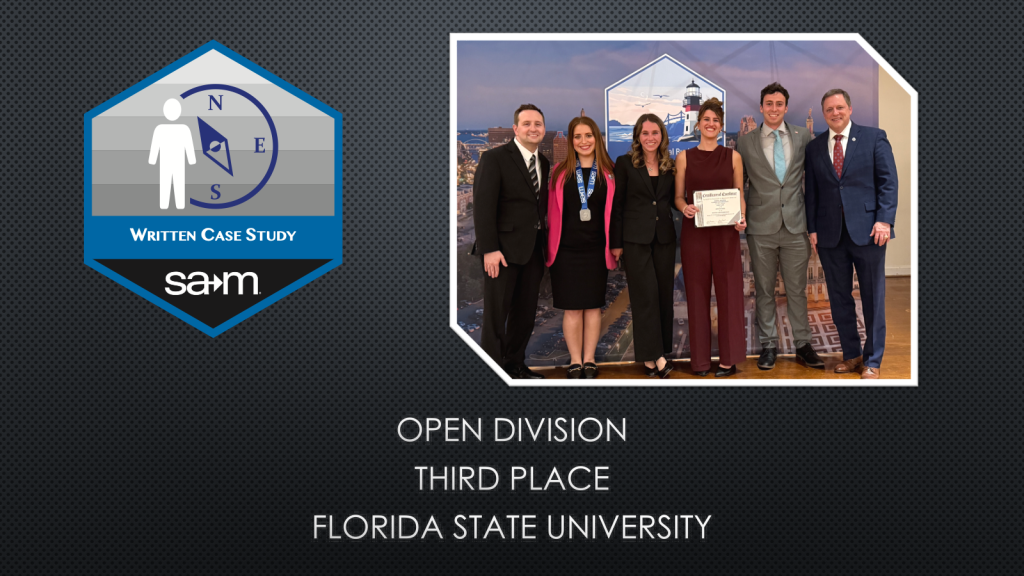
Third Place — Florida State University
Curtis Austin, Brooke Abbott, and Jules Johannemann
Across the board, these teams demonstrated a strong command of both analysis and communication. More importantly, they showed an ability to think through a problem in a way that aligns with how decisions are made in real organizations.
The Open Division continues to highlight what happens when students are given the opportunity to operate at a higher level. This year’s competition made it clear that many of these students are already doing just that. They are not simply preparing for professional roles. They are beginning to perform within them.