
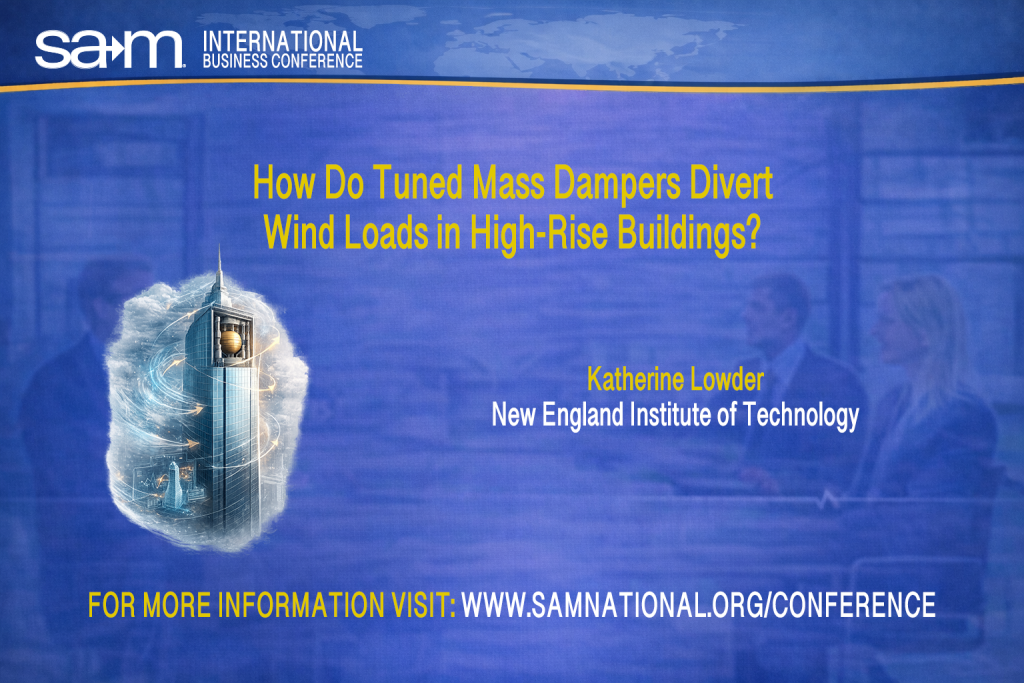
Skylines are defined by height, but height introduces vulnerability. As buildings rise higher into the atmosphere, they become increasingly susceptible to wind induced motion and seismic excitation. Even structures engineered with immense strength and rigidity must account for dynamic forces that create sway, vibration, and structural stress. The question for engineers is not whether these forces exist, but how they can be managed safely and effectively. Tuned Mass Dampers offer one of the most sophisticated answers.
A tuned mass damper, often referred to as a TMD, consists of three primary components: a mass, a spring, and a damper attached to a structure. Installed near the top of high rise buildings, these devices are designed to counteract structural motion caused by high winds or earthquakes. When a building begins to sway, kinetic energy transfers from the structure to the TMD. The device then dissipates that excess energy, reducing motion and stabilizing the building. This controlled energy absorption protects both the structural frame and the occupants within.
The science behind TMDs lies in frequency tuning. Each building vibrates at a natural frequency when influenced by wind loads. A properly calibrated TMD is tuned to oppose that specific frequency, effectively working against the motion. The process is comparable to noise canceling headphones, where opposing sound waves reduce unwanted noise. By counterbalancing wind induced vibrations, TMDs limit sway and enhance structural comfort and safety.
This student research presentation examines how tuned mass dampers divert wind loads in high rise structures through both literature review and case study analysis. The research focuses specifically on translational TMDs and pendulum TMDs, two commonly implemented designs. Translational dampers move horizontally to offset building sway, while pendulum dampers swing in response to motion, absorbing and redistributing energy through controlled oscillation.
The study incorporates interviews with a structural engineering subject matter expert to provide insight into the practical design considerations behind implementing TMD systems. Not all buildings require such devices, but for tall structures exposed to sustained wind pressures, TMDs serve as a critical safeguard. Historical examples of structural failures caused by wind and seismic excitation underscore the importance of proactive engineering solutions.
Beyond technical mechanics, the session highlights the broader implications for structural engineering education and professional practice. As urban development continues to prioritize vertical growth, engineers must integrate dynamic load mitigation strategies into the earliest stages of design. Tuned mass dampers represent a convergence of physics, materials science, and practical application that reinforces the importance of foundational engineering principles.
For students, practitioners, and industry leaders, this presentation provides both theoretical understanding and applied perspective on one of the most specialized tools in high rise construction. By mitigating wind induced loads and reducing structural sway, tuned mass dampers help ensure that architectural ambition remains aligned with occupant safety and long term structural integrity.
Author and Affiliation
Katharine Lowder, New England Institute of Technology
This presentation will be delivered in person at the SAM International Business Conference as part of the Invitation Only Submissions track. Attendees will explore how tuned mass dampers function in high rise structures and examine their role in mitigating wind loads and enhancing structural resilience. For more information visit www.samnational.org/conference