
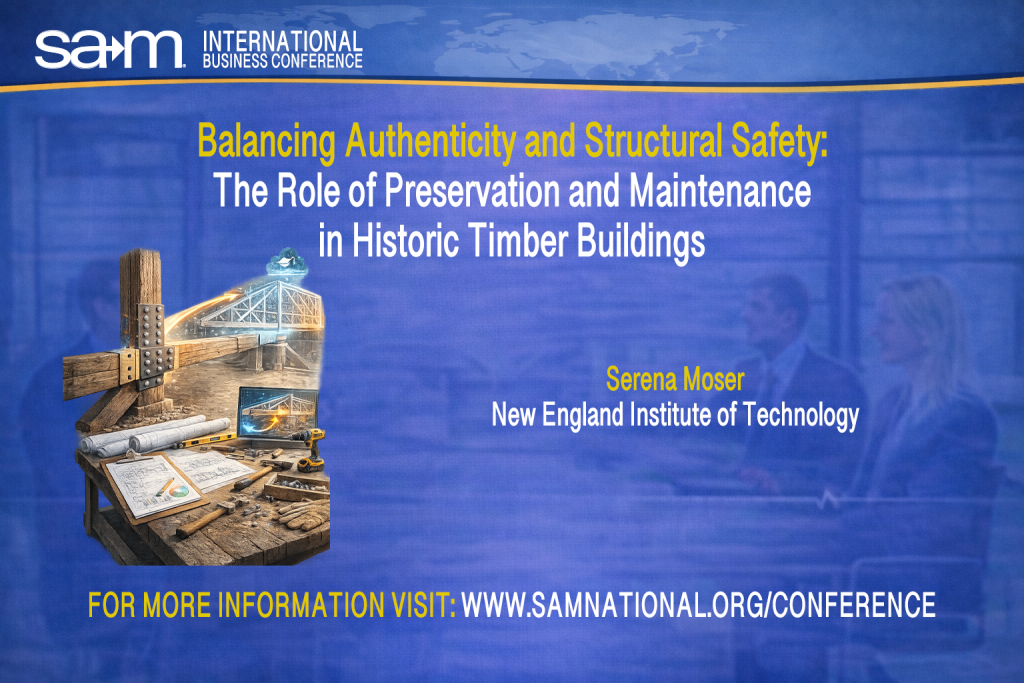
Historic timber buildings tell the story of labor, craftsmanship, and regional identity. From industrial mills to agricultural barns, these structures reflect the materials, tools, and construction knowledge of their time. Their exposed beams, joinery techniques, and structural systems are not simply functional elements. They are cultural artifacts embedded in the built environment. Yet preserving these buildings presents a complex challenge. Timber, as an organic material, is inherently vulnerable to decay, insect damage, moisture infiltration, and long term structural fatigue.
Preservation professionals must constantly weigh authenticity against safety. Structural degradation cannot be ignored, but excessive intervention risks erasing the very character that defines a historic structure. This student research presentation explores how practitioners establish intervention thresholds that protect both structural integrity and historic significance. The central question is not whether repairs are necessary, but how much intervention is appropriate before authenticity is compromised.
The study examines how engineers and preservation architects evaluate timber deterioration and determine acceptable levels of repair, reinforcement, or replacement. Techniques such as end splices, dutchman patches, and localized reinforcement allow damaged sections to be stabilized while retaining as much original material as possible. These approaches reflect conservation theory principles that emphasize minimal intervention and reversibility whenever feasible.
Case studies of historic timber buildings provide practical context. Industrial and agricultural heritage sites illustrate the range of structural conditions that preservation specialists encounter. Interviews with industry professionals, including preservation architects, offer insight into the decision making process behind repair strategies. These conversations highlight the tension between meeting modern safety codes and respecting the historical fabric of a building.
National standards, including guidance from preservation authorities, inform these decisions. However, applying standards requires professional judgment. Engineers must assess dead loads, connection behavior, and structural capacity while recognizing the value of aging materials. Timber heritage buildings often demand custom solutions rather than standardized replacements.
The broader implication of this research extends beyond individual structures. As communities invest in adaptive reuse and heritage conservation, engineering and architectural disciplines must collaborate closely. Preservation is not solely about aesthetics. It is about sustaining structural performance while honoring cultural identity. Clear intervention thresholds help ensure that historic timber buildings remain both safe and authentic for future generations.
For students and professionals in structural engineering, architecture, and historic preservation, this session underscores the importance of interdisciplinary analysis. Balancing authenticity with structural safety requires technical expertise, ethical consideration, and a deep respect for material history.
Author and Affiliation
Serena Moser, New England Institute of Technology
This presentation will be delivered in person at the SAM International Business Conference as part of the Invitation Only Submissions track. Attendees will explore how preservation specialists define intervention thresholds that maintain authenticity while ensuring structural safety in historic timber buildings. For more information visit www.samnational.org/conference